
Toward the end of my New Mexico journalistic career, I had a run-in with a celebrity driving a gold Land Rover – gold! I was backing my old Toyota coop out of a dead-end intersection on a dirt road in the Tesuque hills between Santa Fe and Los Alamos. It was night, and I had missed a turn. Suddenly the Land Rover was blocking my way. A compact man with white hair got out and, keeping his distance, was saying something. I stepped out. He said: Why are you here?

By Larry Joseph Calloway (c) Contemplare et contemplata aliis tradere (to contemplate and hand on to others the fruits of contemplation) – Motto of the Dominican order of Catholic friars.
INTRO: One of the few Hindu beliefs that Buddhism carried from northern India in its migration throughout Asia (and the world) was Karma. It was based on the observation that all human actions — by body, speech or mind — have consequences. Moral causation is a principal in many religions, but Indian karma was distinguished by two strict corollaries: Karma is a law without exceptions and it continues through unending cycles of death and rebirth (called samsara). But the Buddhist appropriation of Karma engendered a strange adaptation. Namely, anatman, the absence of a self. So how can there be a […]
MY SISTER, who lives in New York and knows more than the usual number of professional actors, has never been to a fringe festival. So I sent her my review notes of the one in Edmonton, Alberta, the largest in north America, with about one-thousand personnel including actors, directors, writers, technicians and volunteers. The first fringe was created by independent performers on the “fringe” of the esteemed professional theatre fest in Edinburgh after WW II. The one in Edmonton this August was the 42nd. It presented about 140 sixty-minute shows in ten days, most by single performers. Pat and I […]
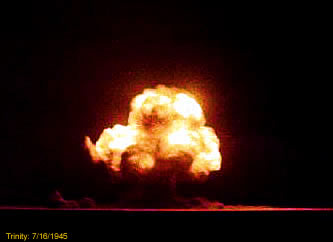
(Some notes on Christopher Nolan’s “Oppenheimer:” The re-enactment of the Trinity test setup in the unpopulated desert west of Alamogordo, NM, is true to life in my opinion, based on inteviews for the 50th anniversary series I wrote for the Albuquerque Journal. The location setting centered on the steel girder tower as well as the five-foot sphere of the plutonium bomb so carefully elevated are to scale with historic photos. Nolan makes dramatic use of the approximately 30-second delay between the blinding light and arrival of the sound and shock at the test control bunker 10,000 meters away. […]
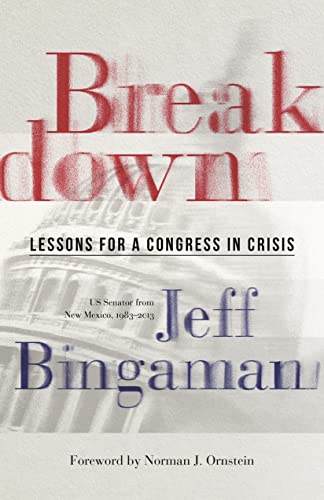
A View From The Factory Floor BY Larry Calloway In the last half of his 30 years representing New Mexico in the U.S. Senate, Jeff Bingaman saw dysfunction of Congress go tactical and political, beginning in 1995 under then-House Speaker Newt Gingrich and continuing under Mitch McConnell whenever he was Senate majority leader. Both are Republicans. Bingaman is a Democrat. “Breakdown,” his memoir just published by an imprint of University of UNM Press, lists four specific tactics: shutting down government, threatening to default on the national debt and, in the Senate, abusing the right to filibuster and refusing to consider […]
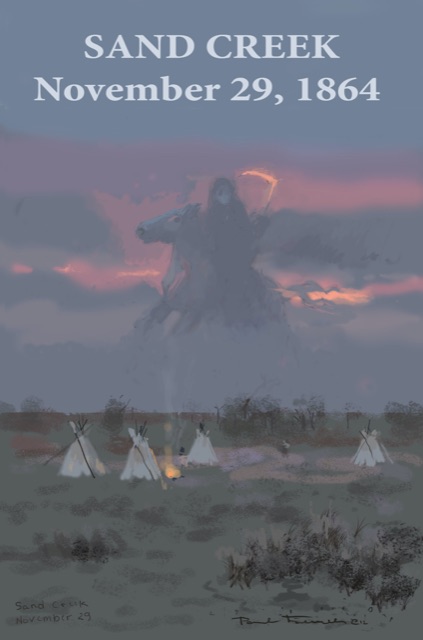
How the Union army continued west after the Civil War. Reviews of “Lakota America” by Pekka Hamalainen and “West from Appomattox” by Heather Cox Richardson————————————————— The Dec. 5 (2020) New Yorker has drawn attention to Pekka Hamalainen, the Danish scholar of American Indian policy. Here is my review of his first book, “Lakota America.” Along T-shirt row in Deadwood, the gold-gulch town in South Dakota’s Black Hills, you can read silk-screened homages to bikers, gunfighters, gamblers, anti-immigrant soldiers (“If you are reading this in English, thank the U.S. military.”) and the armed protection of private property. The town’s history […]
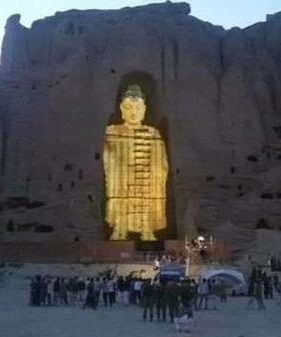
I recall the day at St. John’s College Santa Fe when news reached the Western world that the Taliban had blown up the two standing Buddhas carved in a cliff in the Bamiyan valley of Afghanistan. We had been reading Buddhist literature as part of the St. John’s College Eastern Classics program, and as we took our seats around a classroom table one of us reported the Taliban’s outrageous act. The seventh-century giants were destroyed. Our faculty moderator taking his seat shrugged off the news with a few words about “non-attachment.” We had discussed attachment as a Buddhist moral […]

This new interpretation of Spinoza, the persecuted 17th century advocate of scientific thinking, constructs an alternative to religious faith that goes beyond negative atheism. Clare Carlisle draws from his philosophy a concept of living “in God.” It suggests, in her words, “the possibility of an immediate, non-dualist awareness of being-in-God, which perhaps resembles the kind of awareness that can arise during meditation or contemplation.” The implicit reference to Eastern practices is consistent with their current popularity and the associated attitude that cuts down fundamental “dualist” theology. It is, to simplify, the rising opposition to living “under God,” which I would like to discuss […]
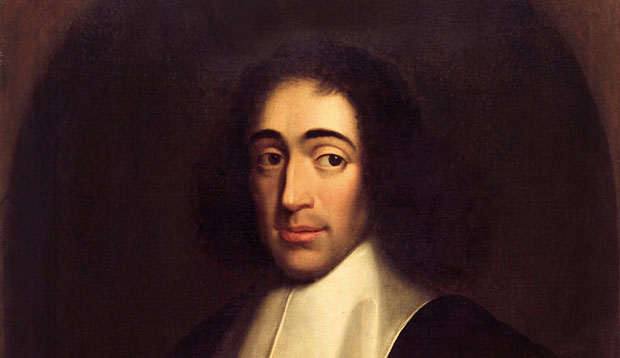
BARUCH SPINOZA in his youth suffered a thorough cursing by the elders of his Amsterdam synagogue, and 365 years later they’re still at it. The original writ against the 23-year-old rabbinical dropout, who would grow to become the foremost philosopher of liberal democracy in the new world of scientific thinking, was presented at the Amsterdam synagogue on July 27, 1656. It said, “Cursed be he by day and cursed be he by night; cursed be he when he lies down and cursed be he when he rises up. Cursed be he when he goes out and cursed be he when […]