About This Site

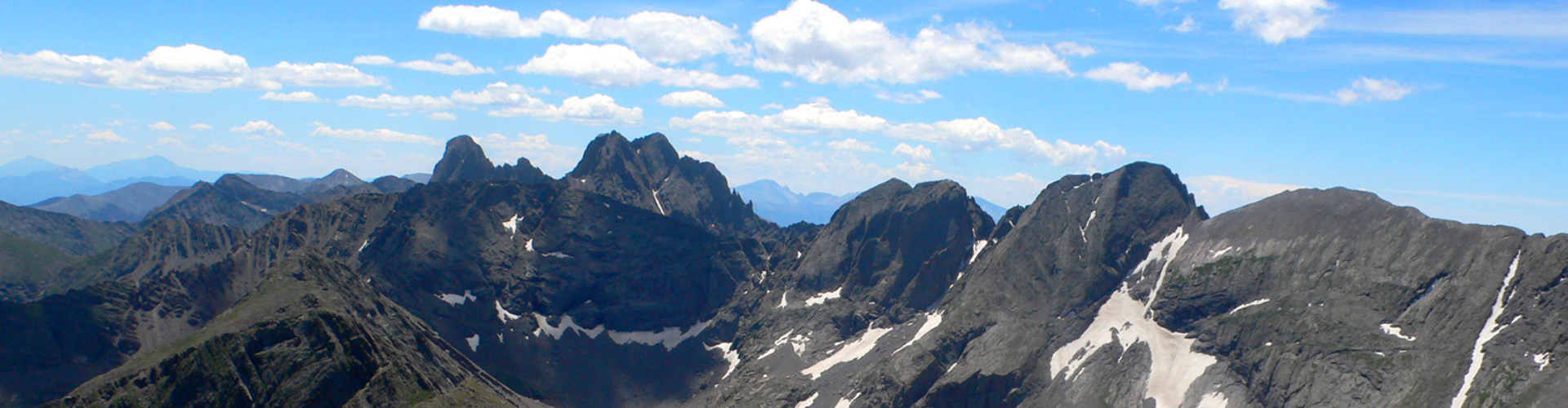
This web cluster — a bunch of reports and opinions about all sorts of things — is  named for the unique kind of rock that forms the Crestone group of high peaks above my cabin.  I live in the San Luis Valley of southern Colorado, between Salida and Alamosa, in a place known for its gathering of builders, climbers, musicians, writers,  poets, herbalists, naturalists, environmentalists, hermits, spiritual practitioners, alternative healers and probably a few cowboys — in short a conglomerate community.

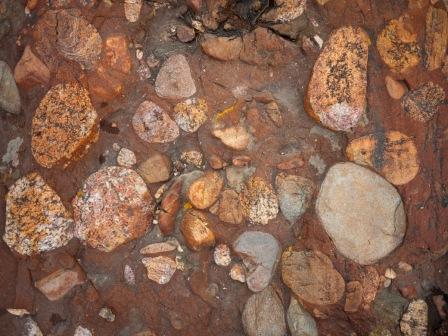
Crestone conglomerate shows up along just five miles of the high Sangre de

Crestone Conglomerate, at 13,000 feet

Cristos and nowhere else. It rock stew, frozen in time. My writer friend Colleen Rae calls it “patchwork rock.”  The Elsewhere in the world conglomerates are breakable, but not this. Hammering will not extract the embedded stones of all colors and sizes, often sheered smooth.

How was it created? What is its source?

It is startling at 13,000 feet to see these sheer rock faces or boulders that mimic the beds of a pretty little streams. They tell of alluvial fans  cemented with an unusual silicate and thrust up, all in unimaginable geological time.

At lower elevations on both the Crestone town and Colony River sides of the range there are boulders of all sizes that have rolled back down. The “rock cycle” continues.  A geologist told the Crestone Eagle, “You get kind of dizzy as you look back in time and realize how many things had to happen to explain what’s in that rock.”

But why name a non-geological web site after this sedimentary lithification? Because, as scholars say when their logic is fuzzy, it resonates. (Or, in keeping with the emerging pun here, it rocks.)

Crestone, the community,  fits one wonderful definition of conglomerate (noun) in the OED: “a mixture of various materials or elements clustered together without assimilation.” Crestone has many, many unassimilated inhabitants (I am one). And, speaking of myself, creator and source of Crestone Conglomerate, the web site, I am a journalist. I  seek to write (not blog) in a manner consistent with the OED definition of conglomerate (verb):  “to form into a ball or (more or less) rounded mass.”

So you can look forward to well rounded postings by an unassimilated alluvial rock fan. If that doesn’t work for you, I have a Wall Street definition. A  conglomerate is a corporation with subsidiaries involved in totally unrelated industries. This might seem full of internal contradiction, until you understand the philosophical sophistication of conglomerated management.

To illustrate.  A traveler stopped at an I-25 restaurant in Tucumcari, NM, and ordered the special. The waitress said it came with two vegetables. What were the choices? The waitress said, “Corn, carrots, peas or toast.” The customer concluded Tucumcari was too close to West Texas, but the more charitable conclusion is that the waitress was using a higher definition of veggie. It’s like saying there are four classes of rock – igneous, metamorphic, sedimentary and Don Henley. Ha! Conglomerates.

But who laughs when scholars list the four material elements of classic Buddhism — earth, water, fire, and wind – or of Greek and Indian texts that add a quintessential “void” to these or of the Chinese elements – earth, water, fire, metal and wood. To those who understand, these classifications make as much sense as electrons, protons and neutrons. To those who don’t they are conglomerates.

So I hope people know what I am up to here, that they will ken my strange conglomerate, this fine kettle of fish, this ball of loose strings.  Otherwise, it’s toast.